1986 — 1993 — Forever

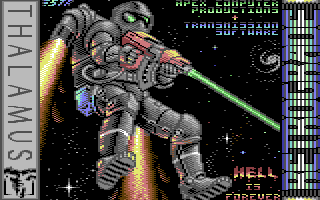
THALAMUS LTD

Britain's Finest C64 Publisher
Born of Zzap!64 — Killed by History — Immortal in Memory

15 C64 Titles
7 Years Active
#1 European Charts
SID Memories

History

From a Ludlow magazine office to the pinnacle of C64 publishing — the rise, brilliance, and fall of Thalamus Ltd.

Founding & Origins (1986)

Thalamus Ltd was established in 1986 as the in-house software publishing label of Newsfield Publications Ltd, the British company headquartered in Ludlow, Shropshire, that published two of the most important magazines in British gaming history: Zzap!64 and CRASH.[1]

The company operated out of Canonbury, North London, with its directors Andrew Wright and Gary Liddon bringing complementary skills to the venture. Wright, formerly a PR Manager at Activision, understood the commercial landscape of British games publishing. Liddon, who had served as a technical writer and reviewer for Zzap!64, understood what made great C64 software. Together they formed one of the most artistically successful publishing partnerships in the history of the Commodore 64.[2]

The name "Thalamus" — referring to the region of the brain that acts as a relay centre for sensory information — suggested ambition and intellectual intent from the outset. This was not a publisher content to churn out budget titles. From its very first release, Thalamus demonstrated a commitment to technical excellence and artistic ambition that would define its entire catalogue.

The Zzap!64 Connection & Controversy

Thalamus's relationship with Zzap!64 magazine was both its greatest structural advantage and the source of its most significant controversy. As a label owned by Newsfield, Thalamus had direct access to the C64 development community and the reviewers who shaped public opinion about new software. Gary Liddon's background as a Zzap!64 staff writer meant he had personal relationships with the developers whose work the magazine covered — a network that proved invaluable in signing talent.[1]

The conflict of interest became explicit with Thalamus's debut release, Sanxion (1986). The game received a Gold Medal and ecstatic review in Zzap!64 — a publication whose parent company owned the game's publisher. The magazine's normally rigorous editorial independence was thrown into question. Critics within the industry noted the impossibility of objective reviewing under these circumstances.[2]

The controversy deepened further when Zzap!64 released a cover cassette titled "Thalamusic" — featuring Rob Hubbard's iconic Sanxion title track as its headline piece. The promotional synergy between the magazine and the label it owned was undeniable, and the episode remains a defining example of the publisher-press conflicts that characterised British gaming media in the 1980s.

Key People

Thalamus's catalogue was defined by a small constellation of extraordinary programmers, composers, and artists who produced work that still stands as some of the finest on any 8-bit platform.

Andrew Wright

Director

Former Activision PR Manager who co-founded Thalamus and managed its commercial operations. His industry experience shaped Thalamus's professional profile in the competitive British games market of the late 1980s.

Gary Liddon

Technical Executive

Former Zzap!64 staff writer whose technical knowledge and developer relationships were central to Thalamus's success. Co-developed the Mix-E-Load system for Delta and had a talent for identifying exceptional programming talent.

Stavros Fasoulas

Programmer — Sanxion, Delta, Quedex

Finnish programmer responsible for Thalamus's first three releases. A prodigious talent who combined C64 technical mastery with strong game design instincts. Departed after completing Quedex to fulfil his compulsory Finnish national service obligations.[2]

Rob Hubbard

SID Composer — Delta, Sanxion

One of the most celebrated SID chip composers of the C64 era. His soundtrack for Delta, influenced by the ambient work of Pink Floyd and Philip Glass, is considered one of the greatest pieces of C64 music ever written. His title track for Sanxion — "Thalamusic" — was popular enough to receive its own cassette release.[3]

Martin Walker

Programmer & Composer — Hunter's Moon, Armalyte

Highly versatile developer who programmed Hunter's Moon solo and contributed additional code and the entire musical score to Armalyte. Walker's compositional work on Armalyte matched the extraordinary quality of the game's visuals and programming.

Cyberdyne Systems

Developers — Armalyte

The development duo of Colin Dooley and Daniel Emmerson, trading as Cyberdyne Systems, created Armalyte — widely considered the finest shoot-em-up ever released on the C64. Their technical achievement in sprite handling and smooth scrolling was exceptional.

The Rowlands Brothers

Developers — Retrograde, Creatures, Creatures II

Steve and John Rowlands pushed the aging C64 hardware further than almost any other developers. Their work on Creatures and its sequel produced graphics that rivalled 16-bit machines, using sprite multiplexing and colour cycling techniques of extraordinary sophistication.[2]

Boys Without Brains

Developers — Hawkeye

A Dutch demo-scene collective who demonstrated that demo-scene programming excellence could translate directly into commercial game development. Their work on Hawkeye brought a distinctly European sensibility to Thalamus's catalogue.

Nick Pelling

Concept — Mix-E-Load

Although not a Thalamus developer, Pelling's BBC Micro programming work provided the conceptual inspiration for the Mix-E-Load system. His earlier experiments with interactive loading screens informed Gary Liddon and Rob Hubbard's groundbreaking implementation in Delta.[4]

The Mix-E-Load Innovation

Of all Thalamus's innovations, none was more audacious or more beloved than Mix-E-Load, introduced in Delta (1987). At its heart, Mix-E-Load was a solution to one of the C64's most persistent frustrations: the interminable wait while games loaded from cassette. But where other publishers offered a static loading screen or a simple tune, Thalamus and developer Stavros Fasoulas — working with Gary Liddon and Rob Hubbard — created something unprecedented.

The concept originated from the work of Nick Pelling, a British programmer renowned for his BBC Micro contributions, who had explored interactive loading screen possibilities on that platform. Liddon recognised the potential and worked with Hubbard to implement a C64 version of extraordinary sophistication. The result: while Delta loaded in the background, players could interact with a fully functional music remixer.[4]

Players could manipulate individual channels of Rob Hubbard's Delta soundtrack in real time — adjusting volumes, switching between musical phrases, altering tempo. The SID chip's three-voice architecture was exposed as a creative instrument, not merely a playback device. Every loading session became a unique musical experience. For C64 owners accustomed to staring at static screens, Mix-E-Load was a revelation. It remains one of the most creative uses of "dead time" in the history of video games.

Rob Hubbard & the Delta Soundtrack

Rob Hubbard's soundtrack for Delta occupies a unique position in C64 music history. Hubbard was already recognised as one of the platform's preeminent composers when he approached the Delta score, but the music he produced for the game represented a significant departure from conventional game music of the era.

Drawing on influences from Pink Floyd's atmospheric rock and Philip Glass's minimalist classical compositions, Hubbard created a score of unusual depth and emotional range. Where C64 game music was often functional and energetic, Hubbard's Delta themes were meditative, layered, and genuinely affecting. The SID chip's limitations were transformed into aesthetic virtues: its characteristic envelope decay and filter resonance became expressive tools rather than technical constraints.[3]

The music was not merely incidental to the Mix-E-Load experience — it was its centrepiece. The fact that players could remix and manipulate these tracks made them engage with the music as active participants rather than passive listeners. Decades later, the Delta SID recordings are still celebrated in the C64 community, and Hubbard's work for Thalamus remains among the most discussed and studied music in 8-bit gaming history.

Armalyte and the Commercial Peak

Armalyte (1988) represented Thalamus at its commercial zenith. Developed by Cyberdyne Systems (Colin Dooley and Daniel Emmerson), the game was a horizontally scrolling shoot-em-up of extraordinary technical and artistic quality. It reached number one in the European software charts, a commercial validation that matched its critical acclaim.[1]

The timing was significant: 1988 was the year when 16-bit machines — the Amiga and the Atari ST — were establishing themselves in the market. That a C64 game could reach number one in the European charts against competition from these more powerful platforms was a testament to both Armalyte's quality and the enduring size of the C64 audience. Thalamus had produced a game that was not merely competitive on its own platform but genuinely compelling in the broader market.

Creatures and the Graphical Peak

If Armalyte represented Thalamus's commercial peak, Creatures (1990) represented its technical and artistic peak. The Rowlands Brothers' platform game was a demonstration that the C64 — a machine designed in 1982 and commercially active since 1983 — still had creative potential that had barely been tapped.

The graphics in Creatures were simply extraordinary. Richly detailed character sprites, animated backgrounds, smooth scrolling, and a colour palette that seemed to exceed what the hardware should be capable of producing. The Rowlands Brothers achieved this through meticulous exploitation of the C64's sprite multiplexing capabilities, cycling colour registers with precise timing to produce visual effects that appeared far beyond the machine's published specification.[2]

Released in 1990, when the market had largely migrated to 16-bit platforms, Creatures was a defiant statement: the C64 was not exhausted. The Rowlands Brothers returned with Creatures II: Torture Trouble in 1992, pushing even further. These games are now considered canonical examples of late-era 8-bit programming excellence.

Decline and Closure (1991–1993)

The forces that ultimately brought Thalamus down were structural and market-wide, not a failure of ambition or quality. Newsfield Publications collapsed in 1991 under severe financial pressure — a victim of the brutal economics of British magazine publishing and changing market conditions as readers migrated from 8-bit to 16-bit platforms.[1]

Thalamus survived Newsfield's collapse initially, but the publisher faced mounting challenges: a rapidly shrinking C64 software market, expensive and over-budget Amiga development projects that generated minimal revenue, and the loss of the Zzap!64 promotional machinery that had given the label its early visibility. Rising production costs and falling sales volumes made the economics increasingly unworkable.

After releasing Nobby the Aardvark in 1993 — the final entry in its C64 catalogue — Thalamus closed its doors in 1993, bringing to an end one of the most artistically significant chapters in British C64 gaming history. The company left behind fifteen C64 releases that, collectively, represent an unparalleled standard of quality for a publisher of its size and lifespan.

Modern Revival — Thalamus Digital Publishing

The Thalamus name was not lost to history. Thalamus Digital Publishing Ltd relaunched as an independent label, bringing the brand into the digital age. Active on itch.io, Thalamus Digital has released updated versions of classic titles across multiple platforms including the C64, ZX Spectrum, Game Boy Color, and Amiga.

The revival represents a genuine continuation of the Thalamus spirit — a commitment to quality retro gaming that respects the heritage of the original label while making its titles accessible to new audiences. For fans who grew up with the original C64 releases, Thalamus Digital Publishing is a welcome affirmation that the work produced between 1986 and 1993 remains worth celebrating, preserving, and playing.
Sources & Citations

  1. MobyGames, "Thalamus Ltd" company profile, MobyGames.
  2. C64-Wiki contributors, "Thalamus Ltd," C64-Wiki.
  3. Lemon64 game database, Thalamus Ltd entries, Lemon64.
  4. Hardcore Gaming 101, "Armalyte," HardcoreGaming101.net; Mix-E-Load concept attribution to Nick Pelling documented in contemporary Zzap!64 coverage and archival C64 community sources.

Games

Fifteen C64 titles that defined an era, plus Amiga releases and the modern Thalamus Digital revival. See the complete catalogue, browse the screenshot gallery, or listen to the SID recordings in the music player.

Commodore 64 Catalogue (1986–1993)

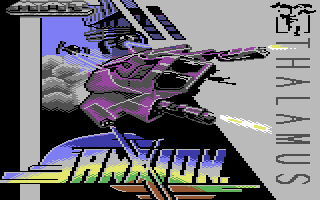
Sanxion

1986 Commodore 64 Stavros Fasoulas

Sanxion was Thalamus Ltd's debut release and an immediate statement of intent. Developed by Finnish prodigy Stavros Fasoulas, this horizontally scrolling shoot-em-up combined blistering machine-code speed with a remarkable split-screen display — the upper portion featuring the main scrolling gameplay while the lower portion showed a radar-style overview of the immediate level ahead, compressing the entire playfield into a miniature tactical readout in real time.

The result was unlike anything else available on the Commodore 64 in 1986. Fasoulas's extraordinary low-level programming ability was evident in every frame: smooth parallax scrolling, crisp sprite work, and a game that never slowed regardless of how many enemies filled the screen. The twelve levels of relentless arcade action demanded both reflexes and strategic route-planning, rewarding players who studied the radar view and anticipated threats before they arrived.

Rob Hubbard's title music — later distributed as "Thalamusic" on a Zzap!64 cover cassette — was itself a landmark SID composition: energetic, melodically rich, and perfectly calibrated to the game's kinetic energy. Sanxion set the template for Thalamus's entire publishing philosophy: technically ambitious, visually striking, and musically sophisticated. For a debut release, it was an astonishing achievement.

Key Facts

Developer
Stavros Fasoulas
Composer
Rob Hubbard
Genre
Horizontal shoot-em-up
Levels
12
Notable
Split-screen radar display; "Thalamusic" cover cassette

Critical Reception

Zzap!64 awarded Sanxion a Gold Medal with exceptional scores across all categories — reviews that became controversial given Zzap!64's parent company owned Thalamus. Community reception has remained overwhelmingly positive; Sanxion consistently appears in "best C64 games" lists on Lemon64 and CSDB.

Screenshots available from Lemon64 (lemon64.com) and CSDB (csdb.dk).

Delta

1987 Commodore 64 Stavros Fasoulas

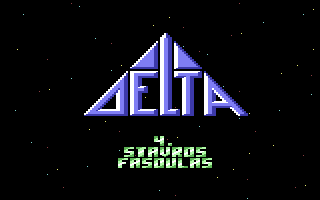
Delta is the game that cemented Thalamus's reputation as the most innovative publisher in C64 gaming. Stavros Fasoulas returned with a vertically scrolling shoot-em-up of exceptional quality, but it was the revolutionary Mix-E-Load system that elevated Delta beyond mere excellence into genuine historic significance.

Mix-E-Load — co-developed by Gary Liddon with its conceptual roots in Nick Pelling's BBC Micro work — allowed players to remix Rob Hubbard's iconic soundtrack in real time while the game loaded in the background. Players could adjust individual channel volumes, switch between musical phrases, and manipulate the SID chip's parameters to create their own version of the music. For the first time, a loading screen was not a dead space to be endured but an interactive experience to be savoured.

Hubbard's score, influenced by Pink Floyd and Philip Glass, was itself extraordinary — meditative, layered, and emotionally resonant in ways that conventional game music rarely attempted. The gameplay followed suit: a vertically scrolling shooter with power-up options designated by Greek letters (Alpha through Omega), a difficulty curve that rewarded persistence, and crisp sprite work that demonstrated Fasoulas's continued technical mastery. Delta remains one of the five finest games ever released for the Commodore 64.

Key Facts

Developer
Stavros Fasoulas
Composer
Rob Hubbard
Genre
Vertical shoot-em-up
Innovation
Mix-E-Load interactive loading soundtrack
Music Influences
Pink Floyd, Philip Glass
Power-ups
Named after Greek letters

Critical Reception

Zzap!64 Gold Medal. Universally acclaimed by the C64 community; consistently ranked among the greatest C64 games ever made. The Mix-E-Load feature received widespread coverage across the British gaming press as a genuine innovation in software design.

Screenshots available from Lemon64 (lemon64.com) and CSDB (csdb.dk).

Quedex

1987 Commodore 64 Stavros Fasoulas

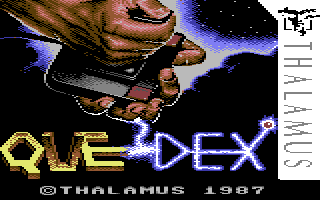
Quedex — its full title: Quedex: The Quest for Ultimate Dexterity — marked Stavros Fasoulas's deliberate departure from the shoot-em-up genre that had made his reputation. Instead of bullets and scrolling landscapes, Fasoulas crafted an abstract ball-control puzzle game that demanded extraordinary precision and patience from its players.

Sixteen obstacle courses, each rendered in an impressive pseudo-3D perspective, challenged players to guide a ball through increasingly fiendish configurations of ramps, slopes, platforms, and moving hazards — all against the clock. The physics simulation was remarkably convincing for 1987 C64 hardware, and the course designs escalated in complexity with sadistic ingenuity.

The game's title was a portmanteau that perfectly encapsulated its nature: a quest demanding ultimate dexterity with a joystick. After completing Quedex, Fasoulas departed for Finland to complete his compulsory national military service, leaving three landmark releases as his Thalamus legacy — a body of work that would be remarkable for any developer, let alone one who accomplished it in a single year.

Key Facts

Developer
Stavros Fasoulas
Genre
Ball-control puzzle / obstacle course
Levels
16
Perspective
Pseudo-3D isometric view
Notable
Fasoulas's final Thalamus game before Finnish national service

Critical Reception

Positively reviewed by Zzap!64; praised for originality and technical achievement in presenting pseudo-3D environments on C64 hardware. Appreciated by the C64 community as an underrated gem that demonstrates Fasoulas's range as a designer.

Screenshots available from Lemon64 (lemon64.com) and CSDB (csdb.dk).

Hunter's Moon

1987 Commodore 64 Martin Walker

Hunter's Moon offered something genuinely novel to the C64 library in 1987: a game that refused easy genre classification. Developed by Martin Walker — who would later contribute programming and music to the landmark Armalyte — the game cast players as hunters tasked with clearing alien creatures from a series of abstract, geometrically structured environments.

The twist that made Hunter's Moon distinctive was its core mechanic: players could not simply destroy all creatures indiscriminately. Each level required eliminating alien life forms in specific proportions — too many kills of one type, or too few of another, would result in failure. This demand for observation and measured restraint alongside quick reflexes gave the game a puzzle dimension that set it apart from straightforward arcade shooters.

Walker's atmospheric presentation — stark, geometric visuals set against the dark void of space, with a musical score of matching eeriness — gave Hunter's Moon a distinctive identity in Thalamus's catalogue. It was a game that rewarded thought as much as reflexes, and it hinted at the substantial technical talent that Walker would bring to Armalyte the following year.

Key Facts

Developer
Martin Walker
Genre
Puzzle / arcade shooter hybrid
Core Mechanic
Proportional alien kill requirements
Setting
Abstract geometric space environments
Notable
Walker's debut as Thalamus developer

Critical Reception

Praised by Zzap!64 and the C64 press for its originality and the unusual depth its proportional kill mechanic added to the shooting genre. Considered an underappreciated title in retrospective assessments of the Thalamus catalogue.

Screenshots available from Lemon64 (lemon64.com) and CSDB (csdb.dk).

Armalyte

1988 Commodore 64 Cyberdyne Systems

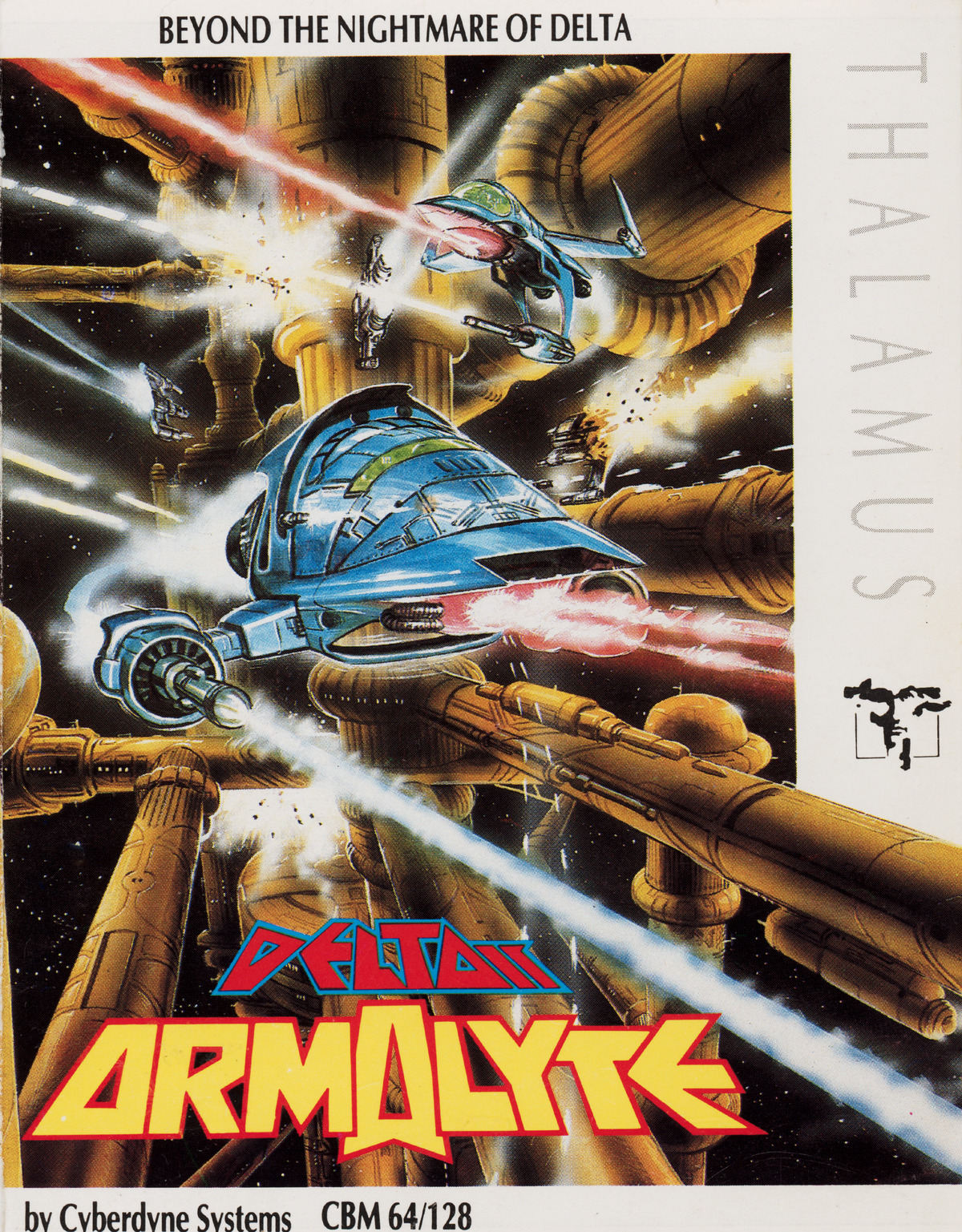
Armalyte is arguably the finest shoot-em-up ever released for the Commodore 64 and stands as the undisputed pinnacle of Thalamus's publishing catalogue. Developed by Cyberdyne Systems — Colin Dooley and Daniel Emmerson — with additional programming by Martin Walker and a complete musical score composed and performed by Walker, the game represented a convergence of C64 development talent that would never be surpassed.

The game drew clear inspiration from Konami's arcade masterpiece R-Type — the horizontally scrolling format, the droid companion system, the emphasis on learning enemy patterns — but executed these ideas with a technical polish and gameplay depth that rivalled and in many respects exceeded its inspiration. Sprite work was extraordinary, the scrolling butter-smooth without a single dropped frame, and the level design offered a genuine sense of escalating threat that made completing the game a real achievement.

The droid companion system — a secondary weapon pod that could be positioned to cover different attack vectors — rewarded advanced players who mastered its strategic deployment. Armalyte was not merely technically excellent; it was designed at the highest level. The game reached number one in European software charts in 1988 — a commercial validation that confirmed what players already knew from their joysticks.

Key Facts

Developer
Cyberdyne Systems (Colin Dooley & Daniel Emmerson)
Add. Programmer
Martin Walker
Composer
Martin Walker
Genre
Horizontal shoot-em-up
Charts
#1 European software charts (1988)
Notable
Droid companion system; considered C64's finest shoot-em-up

Critical Reception

Zzap!64 Gold Medal; scored 96% overall — one of the magazine's highest scores ever awarded. Unanimously considered among the greatest C64 games of all time; top-ranked on Lemon64 and a consistent reference point for shoot-em-up excellence. Documented extensively by Hardcore Gaming 101.

Screenshots available from Lemon64 (lemon64.com) and CSDB (csdb.dk).

Hawkeye

1988 Commodore 64 Boys Without Brains

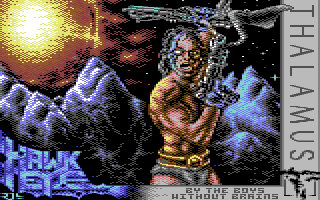
Hawkeye was developed by Boys Without Brains, a Dutch demo-scene collective who demonstrated that the extraordinary technical skill concentrated in the European demo scene could translate directly and effectively into commercial game development. This was a significant validation both for the developers and for Thalamus, whose willingness to look beyond the established British development community brought fresh perspectives into its catalogue.

The game combined horizontal shooting sections with platform-style gameplay sequences, creating a varied and engaging experience across its multiple levels. The demo-scene DNA was legible throughout the presentation: the sprite handling, colour use, and scrolling all displayed the hallmarks of developers who had spent years pushing hardware boundaries in a context — the demo scene — where technical achievement was the entire point.

Hawkeye featured multiple weapon types, distinct enemy designs, and a visual energy that gave it a distinctive European feel compared to many of its British contemporaries. The game was a successful commercial release and an important entry in the Thalamus catalogue as evidence of the publisher's international outlook and its instinct for finding talent in unconventional places.

Key Facts

Developer
Boys Without Brains (Netherlands, demo scene)
Genre
Mixed: horizontal shooter + platform sections
Origin
European demo-scene development team
Notable
First major commercial release from Boys Without Brains

Critical Reception

Positively reviewed by the C64 press; praised for its visual presentation and the variety offered by combining shooting and platform gameplay. Recognised as a successful example of demo-scene talent transitioning to commercial development.

Screenshots available from Lemon64 (lemon64.com) and CSDB (csdb.dk).

Katakis

1988 Commodore 64 Rainbow Arts / Manfred Trenz

Katakis arrived at Thalamus under extraordinary circumstances. Developed by the German studio Rainbow Arts and programmed by Manfred Trenz, it was originally conceived as a C64 conversion of Irem's arcade hit R-Type. When a licensing dispute prevented an official C64 port, Trenz reworked the game sufficiently to avoid direct infringement and Thalamus published it in the UK and Europe as Katakis in 1988.

Whatever its complicated origins, Katakis stood as a technically impressive achievement in its own right. Trenz's programming delivered smooth horizontal scrolling, dense enemy formations, and set-pieces that rivalled the arcade experience it had been adapted from. The game's Force Pod weapon system offered strategic depth, and the level design escalated in intensity with each stage.

The development of Katakis had a further consequence that would prove far more enduring: Trenz's work on the game directly led to him creating Turrican, one of the greatest action games ever released on any platform. In publishing Katakis, Thalamus inadvertently played a small but genuine role in Turrican's genesis. The game is remembered today as both a quality release in its own right and a fascinating footnote in the history of C64 shoot-em-up development.

Key Facts

Developer
Rainbow Arts / Manfred Trenz
Genre
Horizontal shoot-em-up
Origin
Adapted from planned R-Type C64 port after licensing dispute
Legacy
Trenz's Katakis work led directly to creation of Turrican
Publisher
Thalamus Ltd (UK/Europe)

Critical Reception

Positively reviewed by the C64 press for its technical quality and entertaining shoot-em-up gameplay. Recognised in retrospect as significant for its place in the lineage leading to Turrican and for Manfred Trenz's emergence as a major C64 development talent.

Screenshots available from Lemon64 (lemon64.com) and CSDB (csdb.dk).

Retrograde

1989 Commodore 64 Rowlands Brothers

Retrograde marked the debut of the Rowlands Brothers in the Thalamus catalogue — and what a debut it was. Steve and John Rowlands, who would go on to create Creatures and push the C64's graphical capabilities further than almost any other developers, introduced themselves to Thalamus's audience with a horizontally scrolling shooter set in a post-apocalyptic future.

The game's visual quality was immediately striking — richer colour, more detailed sprites, and a stronger sense of environmental atmosphere than many of its contemporaries. The Rowlands Brothers' exceptional eye for colour composition and sprite design was evident throughout, giving Retrograde a visual identity that stood apart from the genre's typical presentations. Multiple weapon types provided tactical variety, and end-of-level bosses added moments of concentrated challenge.

A narrative framing gave Retrograde more context than most C64 shooters of the era, grounding the action in a coherent science-fiction setting and giving players a sense of purpose beyond simple score accumulation. It was a strong commercial and critical debut that established the Rowlands Brothers' reputation and pointed unmistakably toward the extraordinary achievements that would follow in 1990 and 1992.

Key Facts

Developer
Rowlands Brothers (Steve & John Rowlands)
Genre
Horizontal shoot-em-up / scroller
Setting
Post-apocalyptic science fiction
Features
Multiple weapons; end-of-level bosses
Notable
Rowlands Brothers' first Thalamus title

Critical Reception

Positively reviewed by the C64 press; particular praise for the visual quality and atmospheric presentation. Recognised as an impressive debut that signalled the Rowlands Brothers' potential as developers of significant importance.

Screenshots available from Lemon64 (lemon64.com) and CSDB (csdb.dk).

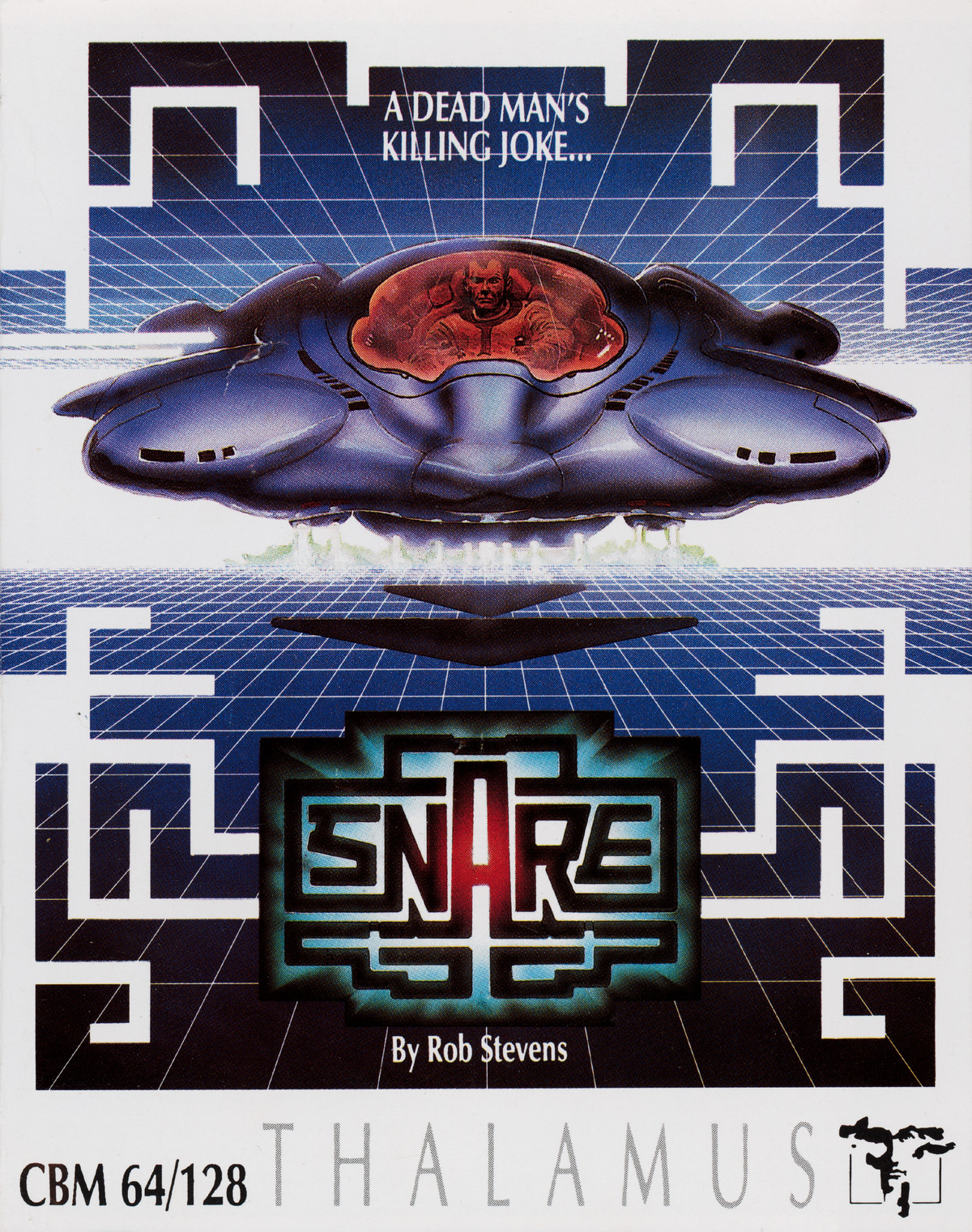
Snare

1989 Commodore 64 Developer unknown

Snare occupies a unique and somewhat enigmatic position in the Thalamus catalogue as perhaps its most surreal and unconventional title. Blending shooter and puzzle elements in a distinctly abstract framework, the game presented players with an unusual world of dreamlike imagery, odd enemy designs, and mechanics that defied easy categorisation.

Where most Thalamus games wore their genre clearly on their sleeve, Snare seemed deliberately resistant to classification. Its environments had a quality of internal logic — rules that became apparent through play rather than instruction — and the game rewarded patient exploration of its systems. The abstract aesthetic gave it an atmosphere quite unlike anything else in the Thalamus library or the wider C64 software landscape of 1989.

The developer of Snare has not been definitively confirmed in available archival records. The game did not achieve the commercial success of Thalamus's flagship titles, but it has developed a cult following among C64 enthusiasts who appreciate its willingness to experiment with form and resist the conventions of the era. Snare is a game for those who want to be unsettled and surprised — and in 1989, Thalamus was unusual in being willing to publish it.

Key Facts

Developer
Unknown (unconfirmed in archival records)
Genre
Puzzle / shooter hybrid; surreal / abstract
Release Year
1989
Notable
Most unconventional Thalamus title; cult following among enthusiasts

Critical Reception

Mixed reviews at the time of release — the game's unconventional nature polarised reviewers accustomed to clearer genre classifications. Since developed a cult following in the C64 community; appreciated retroactively for its originality.

Screenshots available from Lemon64 (lemon64.com) and CSDB (csdb.dk).

Creatures

1990 Commodore 64 Rowlands Brothers

Creatures represents one of the greatest technical achievements in Commodore 64 gaming history — and arguably the finest moment in Thalamus's entire catalogue. Developed by Steve and John Rowlands, this platform game was a landmark demonstration that the C64, a machine designed in 1982 and commercially active since 1983, still had creative and technical potential that had barely been tapped even as 1990 began.

The graphics were simply extraordinary by any measure. Richly detailed character sprites with fluid animation, elaborately decorated background environments, smooth scrolling, and a colour palette that seemed to violate the hardware's published specifications. The Rowlands Brothers achieved this through meticulous exploitation of the C64's sprite multiplexing capabilities, cycling colour registers with frame-precise timing to produce visual effects that appeared far beyond what the machine should be capable of. The result rivalled contemporary 16-bit games on the Amiga and Atari ST in visual quality.

The gameplay was inventive and characterful throughout, with a distinctive British humour running through its enemy designs and level themes. A bonus "torture chamber" sequence — in which captured enemies could be despatched in elaborately comic ways — added a layer of gleeful irreverence to proceedings. Creatures was not merely a great game; it was a proof of concept that the C64 was far from artistically exhausted even as the market moved on.

Key Facts

Developer
Rowlands Brothers (Steve & John Rowlands)
Genre
Platform game
Notable Features
Bonus torture chamber mini-game; exceptional C64 graphics
Technical Achievement
Sprite multiplexing; colour cycling; near-16-bit visuals
Context
Released 1990; rivals contemporary Amiga/ST in visual quality

Critical Reception

Outstanding reviews across all C64 publications; widely considered a graphical landmark and one of the finest platform games ever released on the C64. Consistently cited as evidence that the C64 had creative life well beyond the mainstream 16-bit transition. A defining game in the Thalamus legacy.

Screenshots available from Lemon64 (lemon64.com) and CSDB (csdb.dk).

Heatseeker

1990 Commodore 64 Paul O'Malley

Heatseeker was a platform game with an environmental theme — an unusual premise for a C64 game in 1990, but one that reflected the growing prominence of ecological concerns in the British cultural and political conversation of the era. Developed by Paul O'Malley, the game placed its protagonist in a world defined by environmental conflict, giving the platform action a narrative hook that made it more memorable than a purely mechanical genre exercise.

Players navigated multi-directional levels collecting environmental MacGuffins, evading or confronting threats, and working toward objectives that tied back to the game's ecological narrative. O'Malley brought solid platform game construction to the project, with competent level design and appropriately themed enemy and hazard designs. The environmental framing gave Heatseeker a topical relevance that was somewhat unusual in an entertainment medium that rarely engaged directly with contemporary politics.

Heatseeker occupies a more modest position in retrospective assessments of Thalamus's catalogue than the publisher's landmark titles, but it demonstrates the label's continued commitment to thematic originality alongside technical ambition. O'Malley's contribution to the Thalamus story is a genuine one, even if Heatseeker was ultimately outshone by the extraordinary Creatures that appeared in the same year.

Key Facts

Developer
Paul O'Malley
Genre
Platform game
Theme
Environmental / ecological
Release Year
1990
Notable
Thematic engagement with contemporary environmental concerns

Critical Reception

Moderately reviewed by the C64 press; noted for its thematic originality and competent platform game construction. Somewhat overshadowed in 1990 by the extraordinary Creatures, released the same year.

Screenshots available from Lemon64 (lemon64.com) and CSDB (csdb.dk).

Summer Camp

1990 Commodore 64 Developer unknown

Summer Camp was a multi-event sports and activity game set in the world of the American summer camp — a familiar cultural institution that provided a colourful and accessible framework for a collection of mini-game challenges. The game took a lighter, more family-friendly approach than the majority of Thalamus's catalogue, demonstrating the publisher's range across different genres and target audiences.

Players competed in a variety of camp activities and competitions, each presented as a distinct mini-game with its own mechanics and skill demands. This format — a collection of individually simple challenges united by a unifying theme — offered accessible, pick-up-and-play entertainment that appealed beyond Thalamus's core arcade audience. The American summer camp setting provided abundant material for varied activity types across the game's event roster.

The developer of Summer Camp has not been definitively confirmed in available archival records from the period. Summer Camp was a commercially motivated release that broadened Thalamus's reach, even if it did not aspire to the technical heights of the publisher's most celebrated titles. It remains a pleasant curiosity in the Thalamus library — a reminder that even the most artistically serious publishers needed accessible crowd-pleasers in the portfolio.

Key Facts

Developer
Unknown (unconfirmed in archival records)
Genre
Multi-event mini-game compilation / sports
Setting
American summer camp
Release Year
1990
Notable
Family-friendly departure from Thalamus's typical arcade style

Critical Reception

Modestly reviewed; the mini-game compilation format was well-received by younger audiences and those seeking accessible, party-style gaming rather than hardcore arcade challenges.

Screenshots available from Lemon64 (lemon64.com) and CSDB (csdb.dk).

Creatures II: Torture Trouble

1992 Commodore 64 Rowlands Brothers

Creatures II: Torture Trouble is the definitive proof that the Rowlands Brothers were operating in a category of their own. Released in 1992 — when the C64 market had substantially contracted and the mainstream gaming conversation had fully migrated to 16-bit platforms and beyond — the sequel to Creatures delivered graphical achievements that should have been impossible for the hardware.

Building on the techniques pioneered in the first Creatures, Steve and John Rowlands pushed sprite multiplexing, colour register manipulation, and background rendering to new extremes. The result was a C64 platformer whose character animations were more detailed, whose backgrounds were more elaborate, and whose overall visual fidelity was simply staggering for an 8-bit machine. The torture chamber bonus system was expanded and refined, with more elaborate and comedically extreme methods of despatching captured enemies.

That this game was released in 1992 — the same year that Wolfenstein 3D was revolutionising gaming on PC — made it simultaneously anachronistic and remarkable. Creatures II was not merely competitive with the C64's own back catalogue; it exceeded it. As a demonstration of what could be extracted from the hardware with sufficient skill and determination, it has never been surpassed. The game stands as an irrefutable monument to the proposition that genius matters more than hardware.

Key Facts

Developer
Rowlands Brothers (Steve & John Rowlands)
Genre
Platform game
Sequel to
Creatures (1990)
Technical Peak
Pushes C64 graphics beyond any contemporary standard
Notable
Expanded torture chamber; released 1992 despite shrinking market

Critical Reception

Excellent reviews from remaining C64 publications; praised universally as one of the finest platformers the C64 ever produced and a technical marvel given the platform's age. Stands today as one of the canonical examples of late-era 8-bit programming excellence alongside only a handful of contemporaries.

Screenshots available from Lemon64 (lemon64.com) and CSDB (csdb.dk).

Winter Camp

1992 Commodore 64 Developer unknown

Winter Camp was the companion piece to 1990's Summer Camp, transporting the multi-event mini-game format from an American summer camp to a winter sports setting. Where Summer Camp offered warm-weather activities, Winter Camp provided the cold-weather equivalent: skiing events, skating, snowball competitions, and similar winter-themed challenges presented as a series of distinct mini-games.

The game maintained the accessible, family-friendly approach of its predecessor, offering entertainment that required no prior genre knowledge or hardcore gaming skills. The mini-game format was well-suited to the winter sports theme, which naturally lent itself to timed events and competitive challenges. Each activity presented its own simple mechanics that players could understand quickly and return to for competitive play.

Released in 1992, Winter Camp arrived in increasingly difficult market conditions for Thalamus and the C64 software market generally. As one of the publisher's final releases before closure, it has a certain valedictory quality — a pleasant, undemanding game arriving as the era it represented was drawing to a close. The developer has not been definitively confirmed in available archival records from the period.

Key Facts

Developer
Unknown (unconfirmed in archival records)
Genre
Multi-event winter sports mini-game compilation
Companion to
Summer Camp (1990)
Release Year
1992
Notable
One of Thalamus's final releases before closure

Critical Reception

Modest reviews; appreciated for its accessible approach and variety of winter sports mini-games. A pleasant but unambitious release that did not generate significant critical attention during Thalamus's declining final years.

Screenshots available from Lemon64 (lemon64.com) and CSDB (csdb.dk).

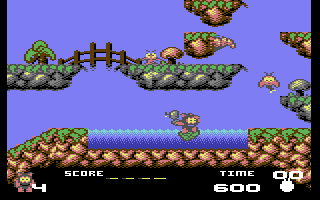
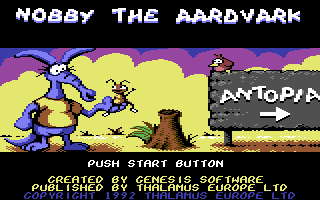
Nobby the Aardvark

1993 Commodore 64 Developer unknown

Nobby the Aardvark carries the particular melancholy of a valediction. As Thalamus's final C64 release — and the last game the company would ever publish — it arrived in 1993 into a market that had effectively closed for 8-bit software. The game featured an anthropomorphic aardvark protagonist navigating colourful platform game levels in the kind of cheerful, cartoon-inflected style that was increasingly common as the industry moved toward more mainstream, family-friendly aesthetics.

Nobby represented an attempt to reach a younger, more casual audience that had come to gaming through the new generation of consoles and 16-bit machines — a demographic that the C64 was by 1993 poorly positioned to capture. The platform game mechanics were solid if unremarkable, and the game had a warmth and charm that made it easy to like, if not to love with the intensity that Thalamus's finest hours inspired.

The developer of Nobby the Aardvark has not been definitively confirmed in available archival records. Whatever its commercial aspirations, the game arrived too late and into too hostile a market to save Thalamus from closure. And yet Nobby carries its historical position with a certain dignity: a company that had begun with the blazing ambition of Sanxion and reached the heights of Armalyte and Creatures closed its chapter with something warm and human. That feels, in retrospect, entirely appropriate.

Key Facts

Developer
Unknown (unconfirmed in archival records)
Genre
Platform game
Protagonist
Nobby the Aardvark (anthropomorphic cartoon character)
Release Year
1993
Notable
Final Thalamus Ltd release; company closed same year

Critical Reception

Modest reception; the game arrived in a market that had substantially moved on from C64 software. Contemporary reviews were not unkind, but the commercial context was by 1993 essentially non-existent for new 8-bit releases. Remembered today primarily as Thalamus's final word.

Screenshots available from Lemon64 (lemon64.com) and CSDB (csdb.dk).

Amiga Titles (Secondary)

Creatures (Amiga)

1992 Amiga Rowlands Brothers

The Amiga conversion of Creatures brought the Rowlands Brothers' landmark platformer to Commodore's 16-bit machine. While the C64 original demonstrated extraordinary programming technique on constrained hardware, the Amiga version benefited from the platform's superior colour depth and sound capabilities. The conversion was handled with care, preserving the original's charm and gameplay while adapting it for the new hardware.

Armalyte (Amiga)

1991 Amiga Cyberdyne Systems

The Amiga version of Thalamus's most celebrated shoot-em-up. Amiga development represented a significant investment for Thalamus in its final years, and the costs of porting titles to the 16-bit platform — with minimal returns in a fragmented market — contributed to the financial pressure that ultimately led to the company's closure.

Thalamus Digital Publishing (Modern)

Classic Title Remasters

2015–present C64 / ZX Spectrum / Game Boy Color / Amiga Thalamus Digital

Thalamus Digital Publishing Ltd relaunched the Thalamus brand as a modern indie publisher, active on itch.io. The label has released remastered and updated versions of classic Thalamus titles alongside new retro-inspired games, targeting enthusiasts of 8-bit and 16-bit gaming across multiple platforms. The Thalamus Digital catalogue honours the spirit of the original label while making its titles accessible in the modern digital marketplace.

Media

SID recordings, longplays, and documentary footage celebrating Thalamus's extraordinary C64 catalogue.

Rob Hubbard — Delta (SID Music)

The iconic Delta soundtrack performed on the SID chip — Pink Floyd meets Philip Glass on an 8-bit synthesiser. One of the most celebrated pieces of C64 music ever composed.

Delta — C64 Longplay

Complete longplay of Delta on the Commodore 64 — Stavros Fasoulas's vertical shoot-em-up masterpiece, featuring the Mix-E-Load system and Hubbard's landmark score.

Sanxion — C64 Longplay

Thalamus's debut release in action — Fasoulas's split-screen shoot-em-up with Rob Hubbard's iconic "Thalamusic" title track.

Armalyte — C64 Longplay

The finest C64 shoot-em-up in full — Cyberdyne Systems' masterpiece that reached number one in the European charts. Watch the droid companion system in action.